
Why I Don't Use WordPress
Why I Don't Use WordPress — And What I Use Instead (Or: how I learned that "free and flexible" can be another way of saying "your problem now.")
Let me say something that will probably upset approximately half the internet:
I don't use WordPress. I tried it. I tried Joomla too. And I walked away from both of them without significant regret.
This is not a technical critique. Plenty of people build excellent things on WordPress — I've seen them, I acknowledge they exist, and I have no interest in telling anyone their tools are wrong. If it works for you, use it.
What I can tell you is why it didn't work for me, and what I use instead. That might be useful if you're standing at the beginning of this journey trying to figure out which direction to go.
The Joomla Chapter
Joomla came first. I built an actual website on it — or something that could generously be described as a website, if you were being generous and perhaps hadn't seen many websites.
The results were, to use a precise technical term, underwhelming.
Joomla is powerful in the hands of someone who knows what they're doing. I was not, at that point, someone who knew what they were doing. The gap between those two things produced results that I will charitably describe as character-building.
I moved on.
The WordPress Situation
WordPress is different from Joomla in the sense that it's considerably more popular, considerably better documented, and — in my experience — considerably more persistent about telling you about it.
The updates. The notifications. The plugins that need updating because another plugin updated and now they're not speaking to each other. The security warnings. The "your site may be at risk" messages that arrive at the precise moment you were planning to do something else.
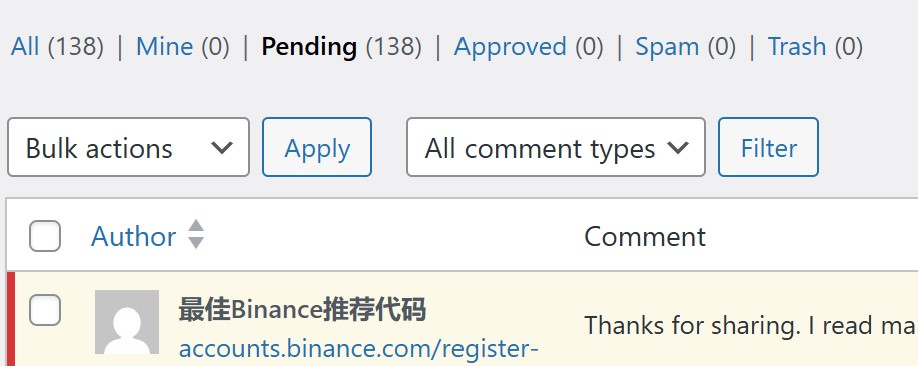
To illustrate: I currently have a weight loss site running on WordPress. At some point it started collecting random submissions — spam, junk, whatever you want to call it. I've told it, configured it, and told it again to block, filter, delete. It nods politely and keeps sending me emails asking what I'd like to do about it. I don't want to do anything about it. I want it to stop. WordPress, apparently, has a different opinion on this. When the domain and hosting expire, I won't be renewing either. Some relationships just run their course.
I am an engineer. I have a full-time job. I have children, a house, and an affiliate marketing business I'm trying to build in the hours between those things. My nervous system has a finite capacity for maintenance tasks that generate no income.
WordPress, in my experience, treats that capacity as a challenge to be tested rather than a resource to be respected.
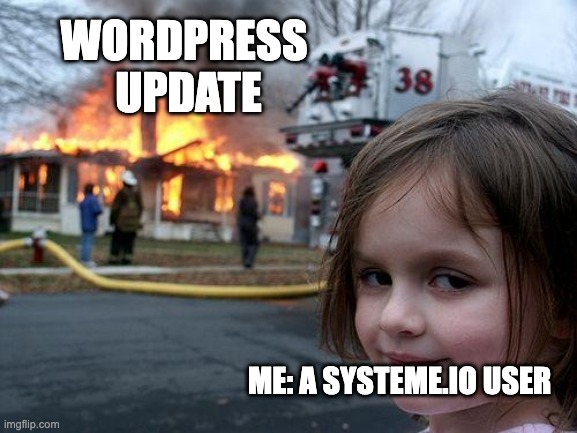
If someone loves WordPress — genuinely, I mean this — then use it. There are people for whom the flexibility and control it offers is exactly what they need, and they build remarkable things with it.
I am not one of those people. And I suspect I'm not alone in that.
What I Use Instead — And Why
When I started building my affiliate marketing business properly, I needed something that was designed for the job I was actually trying to do — not a general-purpose website builder that I'd then need to adapt, extend, and maintain indefinitely.
The short version: I went through Systeme.io first, then Builderall, and I'm now on the Affiliate System. (One note on the Affiliate System: as of March 2026, it's not publicly available yet — access is currently limited to Internet Profits Academy members. They're working on a wider release, and I'll update this post as soon as that changes. If you're already in the Academy, you know where to find it.)
Each one was the right tool for where I was at the time.
I've written about that evolution in detail — the what, the why, and the honest assessment of each one — in a separate post: [The Tools I Actually Use — And The Ones I Left Behind.]
The one-line summary: for affiliate marketing specifically, a purpose-built marketing platform will save you more time, fewer headaches, and — crucially — will actually integrate with the advertising systems you need to run traffic.
WordPress will not do that for you. Not without plugins. Not without maintenance. Not without the kind of ongoing technical attention that could be spent on things that actually move the needle.
The lesson: the right tool is the one designed for the job you're actually doing.
WordPress is a remarkable tool for building websites. If building a website is your goal, use it.
If your goal is building an affiliate marketing system — funnels, email sequences, lead capture, ad integration, automated follow-up — there are platforms built specifically for that. Use those instead.
Your nervous system will thank you.
— Eugene B.
